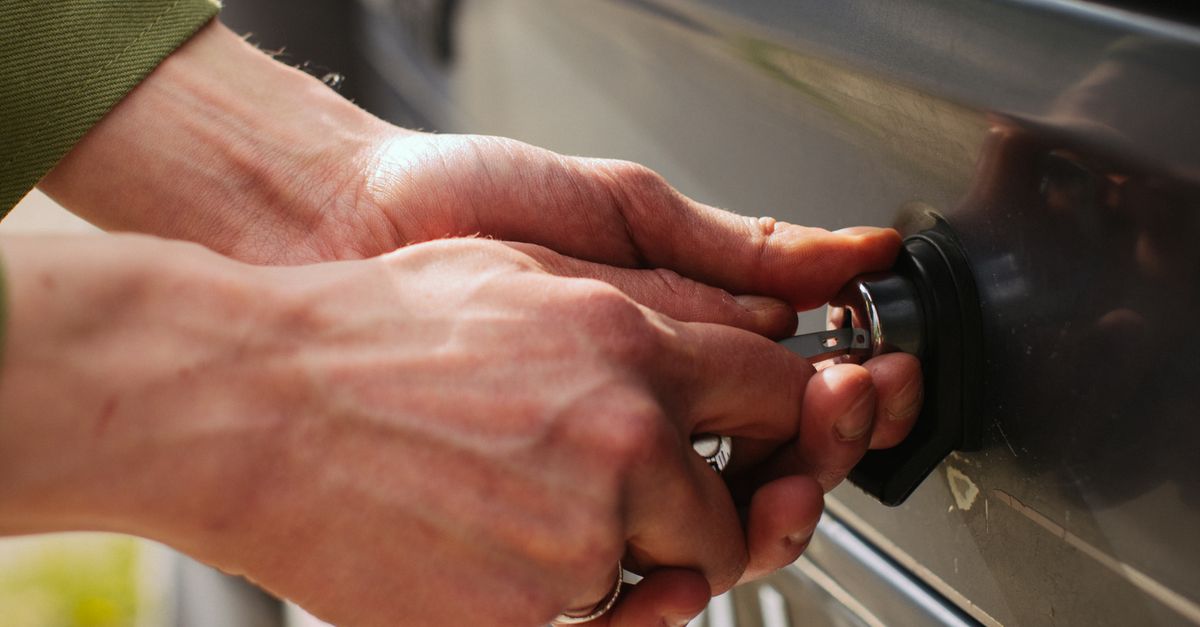

Why Broken Key Extraction & Repair Requires a Professional Hand
Keys snap inside cylinders for predictable reasons: metal fatigue from years of use, a lock that has become stiff due to lack of lubrication, forcing a key that was already bent, or a cylinder that has partially frozen on a cold Ohio winter morning. In every case, the broken fragment is wedged against the same spring-loaded pins that allow the key to turn — which means it resists removal. Homeowners commonly try tweezers, super glue on a matchstick, or a stiff wire, and while those methods occasionally work on shallow breaks, they more often push the fragment deeper, coat the cylinder interior with adhesive, or break off a second improvised tool inside the lock. At that point, what started as a straightforward extraction job can escalate into a full cylinder replacement.
Our technicians approach every extraction with a systematic inspection first. Using a penlight and a thin pick gauge, they confirm the exact position and orientation of the fragment before any tool is inserted. In most situations, extraction hooks and a jiggle pick allow the piece to be worked out along the natural path of the keyway without disturbing the pin stacks. For mortise lock cylinders — common on older Miamisburg commercial buildings and period homes near the Linden Avenue historic district — the process is slightly different because the cylinder removes from the mortise case, allowing for bench extraction and easier reassembly. Either way, our goal is to preserve the existing hardware wherever possible and have you operating your lock normally before we close the job.